

Many London landlords assume obtaining an Energy Performance Certificate is simply a tick-box exercise, yet this misunderstanding often leads to compliance issues and missed opportunities for energy savings. An EPC involves far more than a quick inspection: it’s a comprehensive assessment of your property’s energy efficiency, complete with actionable recommendations and legal obligations you must understand. Whether you’re renting out a flat in Shoreditch or selling a Victorian terrace in Wandsworth, knowing exactly what an EPC entails ensures you meet regulatory standards whilst improving your property’s appeal and reducing running costs.
Table of Contents
- Key takeaways
- What is an energy performance certificate and why is it needed?
- What does the EPC assessment process involve?
- Understanding the EPC report: key elements and improvement recommendations
- Legal responsibilities and benefits of having an EPC for landlords in London
- How Complete EPC supports London property owners with their EPC needs
- What does an energy performance certificate involve? – frequently asked questions
Key Takeaways
| Point | Details |
|---|---|
| Legal requirement | An EPC is a UK legal requirement when selling or renting a property and the Minimum Energy Efficiency Standards mandate an E rating for rental properties. |
| Market impact | A high EPC rating enhances marketability, supports competitive rents and signals lower running costs to prospective tenants. |
| Assessment steps | The assessment is carried out by a qualified domestic energy assessor, with property access and relevant documents required and the inspection typically lasting 45 to 90 minutes. |
| Validity and renewals | EPCs are valid for ten years, and landlords may commission new assessments after substantial improvements to reflect better energy performance. |
What is an energy performance certificate and why is it needed?
An Energy Performance Certificate is a UK legal requirement when selling or renting a property, showing its energy efficiency on a standardised scale. The certificate provides prospective buyers or tenants with transparent information about how much energy a property consumes and its environmental impact through carbon dioxide emissions. For London property owners, this document has evolved from a simple legal formality into a crucial factor affecting marketability, rental income potential, and compliance with increasingly stringent environmental legislation.
Understanding energy performance certificate regulations is essential for anyone involved in London’s property market. The legal framework requires landlords to provide valid EPCs before marketing properties for rent or sale. Since April 2020, the Minimum Energy Efficiency Standards mandate that rental properties must achieve at least an E rating, with limited exceptions. Properties rated F or G cannot legally be let unless specific exemptions apply, making the EPC more than just paperwork but a gateway to lawful letting.
Who exactly needs an EPC? The requirement applies to:
- Landlords advertising residential properties for rent
- Property owners selling homes or commercial buildings
- Developers marketing new-build properties
- Estate agents listing properties on behalf of owners
Beyond legal compliance, EPCs contribute significantly to the UK’s environmental goals by encouraging property improvements that reduce carbon emissions. The certificate’s recommendations section guides owners towards practical upgrades like improved insulation, efficient heating systems, or double glazing that deliver measurable energy savings. For London landlords facing competitive rental markets, a strong EPC rating signals quality and cost-effectiveness to prospective tenants who increasingly prioritise running costs when choosing accommodation.
The certificate’s validity extends for ten years, but savvy landlords often commission new assessments after making significant improvements to capture enhanced ratings. Properties undergoing major renovations, extension work, or heating system replacements may benefit from fresh assessments that reflect upgraded energy performance. This strategic approach transforms the EPC from a compliance burden into a marketing asset that justifies premium rents and attracts environmentally conscious tenants.
What does the EPC assessment process involve?
Obtaining an EPC begins with engaging a qualified domestic energy assessor accredited by an approved scheme. London property owners should verify assessor credentials through the official EPC register and request quotes from multiple providers to ensure competitive pricing. The assessor schedules a convenient inspection time, typically requiring 45 to 90 minutes depending on property size and complexity. Preparation matters: ensure the assessor can access all rooms, lofts, and heating controls, and gather documentation about recent improvements like new boilers or insulation work.
During the physical inspection, the EPC assessment involves examination of walls, roofs, heating, lighting, and insulation to establish the energy rating. The assessor systematically records:
- Property dimensions and room layouts
- Construction type and age of the building
- Wall, roof, and floor insulation specifications
- Window types, glazing, and frame materials
- Heating system details including boiler age, type, and controls
- Hot water system configuration
- Lighting types throughout the property
- Renewable energy installations like solar panels
Assessors use standardised government-approved software that processes collected data through algorithms based on the Standard Assessment Procedure (SAP) for domestic properties. This calculation methodology considers thermal efficiency, heating costs, and carbon emissions to generate the property’s rating. The software applies default assumptions where specific information isn’t available, which occasionally means properties with undocumented improvements receive lower ratings than deserved.
Pro Tip: Before your assessment, compile evidence of energy efficiency improvements such as boiler service records, insulation installation certificates, or double glazing warranties. Providing this documentation ensures the assessor accurately records upgrades that positively impact your rating.
The entire process from booking to certificate delivery typically spans three to five working days. Following inspection, the assessor uploads data to the national EPC register, generating your certificate and recommendation report. You’ll receive both documents electronically, and they become publicly accessible through the register for the certificate’s ten-year validity period. This transparency allows prospective tenants or buyers to review your property’s energy performance before viewings.

Common preparation mistakes include restricting assessor access to loft spaces where insulation thickness significantly affects ratings, failing to mention recent heating system upgrades, or scheduling assessments when builders are mid-renovation. The London EPC obtaining checklist helps property owners avoid these pitfalls by systematically preparing for assessment day. Remember that assessors cannot provide ratings for properties with incomplete construction or missing essential elements like permanent heating systems.
Understanding the EPC report: key elements and improvement recommendations
Your completed EPC report arrives as a multi-page document containing far more than just a letter grade. The certificate’s front page displays your property’s current energy efficiency rating and its environmental impact rating, both using the familiar A to G scale with colour-coded bands. These ratings differ slightly: the energy efficiency rating reflects running costs, whilst the environmental impact rating indicates carbon dioxide emissions. Most London properties fall within the C to E range, with Victorian and Edwardian buildings often requiring substantial improvements to meet modern standards.
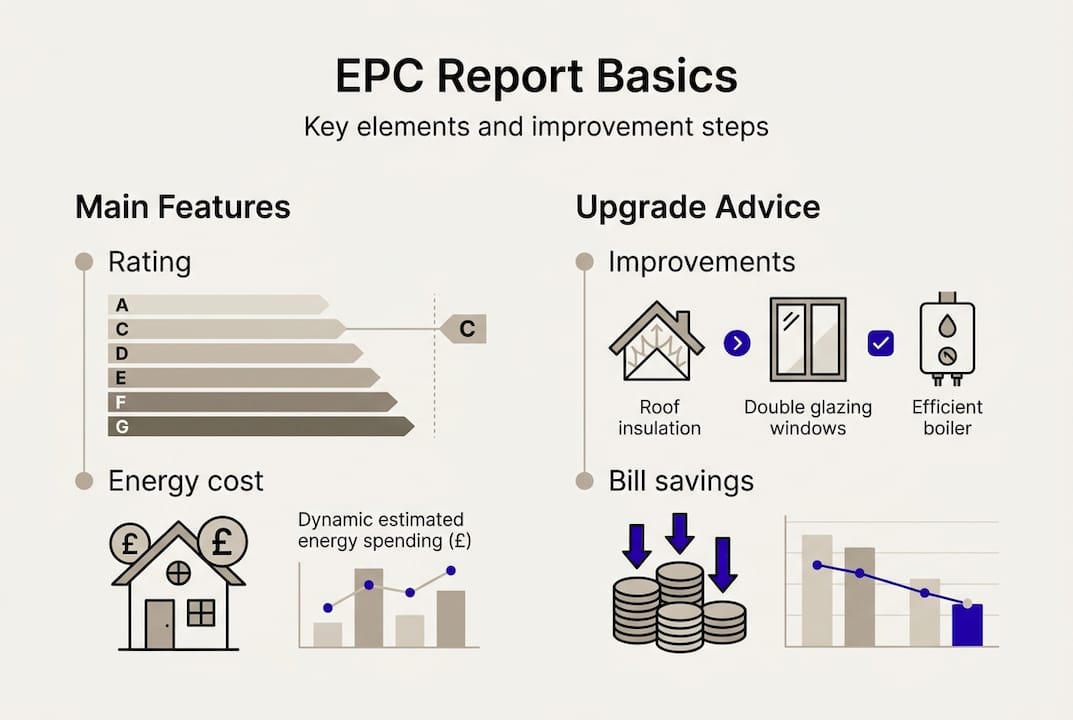
EPC reports include an energy efficiency rating from A (most efficient) to G (least efficient) plus improvement suggestions tailored to your specific property. The certificate estimates current and potential energy costs, showing what you might achieve through recommended upgrades. This financial projection helps landlords evaluate whether improvement investments deliver worthwhile returns through reduced bills or increased rental values. For example, upgrading from an E to a C rating might cost £8,000 but could justify £50 to £75 additional monthly rent in competitive London markets.
The recommendations section forms the report’s most valuable component, listing specific improvements ranked by cost-effectiveness:
- Low-cost measures like draught-proofing, loft insulation top-ups, or LED lighting upgrades
- Medium-cost improvements including heating control upgrades, cavity wall insulation, or double glazing
- Higher-investment measures such as complete heating system replacements, solid wall insulation, or solar panel installations
Each recommendation includes estimated implementation costs, potential energy bill savings, and the rating improvement it could deliver. The recommendation report EPC provides detailed guidance on prioritising these upgrades based on your budget and property characteristics.
| Current rating | Typical annual energy cost | Potential rating after improvements | Potential annual cost | Annual saving |
|---|---|---|---|---|
| E (45) | £1,420 | C (72) | £945 | £475 |
| D (60) | £1,180 | B (85) | £685 | £495 |
| F (35) | £1,685 | D (65) | £1,095 | £590 |
Pro Tip: Focus first on recommendations that improve multiple aspects simultaneously. For instance, replacing an old boiler with a modern condensing model improves heating efficiency whilst enabling better controls, delivering compound benefits that accelerate your rating improvement.
The certificate also details your property’s current features, creating a transparent record of construction type, insulation levels, and heating specifications. This technical summary helps when planning renovations or explaining energy performance to prospective tenants. Understanding these elements empowers you to make informed decisions about which improvements deliver maximum impact for your investment, transforming the EPC from a compliance document into a strategic property improvement roadmap.
Legal responsibilities and benefits of having an EPC for landlords in London
London landlords face clear legal obligations regarding EPCs that extend beyond simply obtaining the certificate. You must commission a valid EPC before marketing any property for rent, making it available to prospective tenants at the earliest opportunity, typically during viewings or within property listings. The certificate must remain valid throughout the tenancy, though you’re not required to renew it mid-tenancy if it expires. Failing to provide an EPC when legally required triggers penalties reaching £5,000 for residential properties, with enforcement action increasingly common as local authorities prioritise energy efficiency compliance.
The Minimum Energy Efficiency Standards represent why landlords need EPCs beyond basic legal compliance, as higher EPC ratings help attract tenants and save costs. Since 2020, letting properties rated F or G became illegal unless you’ve registered a valid exemption. Exemptions exist for specific circumstances like buildings with short remaining leases, properties where improvements aren’t cost-effective, or listed buildings where alterations require special consent. However, exemptions last only five years and require formal registration, meaning landlords cannot simply ignore poor ratings indefinitely.
Key legal responsibilities include:
- Obtaining valid EPCs before marketing properties
- Providing certificates to prospective tenants upon request
- Ensuring rental properties meet minimum E rating standards
- Registering formal exemptions where applicable
- Maintaining accessible records of EPC compliance
Beyond avoiding penalties, improving your EPC rating delivers tangible commercial advantages. Properties with C or B ratings command premium rents in London’s competitive market, as tenants increasingly recognise that higher ratings translate to lower utility bills. Research shows tenants will pay 5% to 8% more monthly rent for properties with superior energy efficiency, viewing reduced running costs as worthwhile trade-offs. This premium easily justifies improvement investments, particularly when combined with increased property values that strong EPC ratings generate.
| Investment scenario | Improvement cost | Rating change | Monthly rent increase | Annual return |
|---|---|---|---|---|
| Loft insulation + LED lighting | £1,200 | E to D | £40 | 40% |
| New condensing boiler + controls | £3,500 | D to C | £65 | 22% |
| Complete package (insulation + heating + glazing) | £12,000 | E to B | £120 | 12% |
The benefits EPCs deliver for landlords extend to reduced void periods, as energy-efficient properties let faster in markets where tenants actively filter searches by EPC rating. Environmental consciousness among younger renters means C-rated properties often receive multiple applications within days, whilst E-rated equivalents languish on portals for weeks. This velocity advantage reduces lost rental income and carrying costs during vacancy periods.
Energy savings represent another concrete financial benefit. Implementing energy efficiency steps for London properties reduces bills for properties where landlords cover utilities, whilst tenant-paid arrangements benefit from reduced maintenance calls about cold rooms or high heating costs. Lower energy consumption also decreases wear on heating systems, extending equipment lifespan and reducing replacement frequency. Forward-thinking landlords recognise that today’s voluntary C rating improvements position portfolios ahead of anticipated regulatory changes requiring higher minimum standards within the next decade.
How Complete EPC supports London property owners with their EPC needs
Navigating EPC requirements needn’t feel overwhelming when you have expert guidance. Complete EPC specialises in helping London property owners obtain accurate, competitively priced energy performance certificates through qualified assessors with extensive local market knowledge. Whether you’re managing a single buy-to-let flat or an extensive portfolio across multiple boroughs, accessing reliable EPC services ensures you meet legal obligations whilst identifying practical improvement opportunities.
Our comprehensive EPC guide for London walks you through every aspect of the certification process, from understanding rating scales to interpreting recommendation reports. For detailed procedural information, the EPC assessment process guide explains exactly what happens during inspections and how to prepare effectively. If you’re uncertain whether your property qualifies for exemptions from minimum standards, our EPC exemption regulations resource clarifies eligibility criteria and registration procedures, ensuring you understand all available options before proceeding with costly improvements.
What does an energy performance certificate involve? – frequently asked questions
How long is an EPC valid?
Energy Performance Certificates remain valid for ten years from the date of issue unless the property undergoes significant alterations affecting energy performance. You can commission a new assessment earlier if you’ve made improvements and want an updated rating. The ten-year validity applies even if the property changes ownership or tenancy multiple times during that period.
Can landlords improve EPC ratings before renting?
Absolutely, and it’s often financially advantageous to do so. Implementing recommendations before marketing properties allows you to advertise higher ratings, attract quality tenants faster, and justify premium rents. Focus on cost-effective improvements like insulation and heating controls first, as these deliver the strongest rating improvements relative to investment.
What happens if a property has no EPC?
Letting or selling properties without valid EPCs constitutes a legal breach that can result in fines up to £5,000 for residential properties. Local authority trading standards teams enforce compliance, increasingly using property portal listings to identify non-compliant landlords. Beyond penalties, properties without EPCs cannot legally be marketed, effectively blocking rental income until you obtain certification.
Are there exemptions from EPC requirements?
Specific exemptions exist for properties where improvements aren’t cost-effective, buildings with short remaining leases, listed buildings requiring special consent for alterations, or temporary lettings under seven months. However, exemptions require formal registration on the national database and remain valid for only five years. Simply having a poor rating doesn’t automatically exempt you from minimum standards.
How can EPC ratings affect rental prices?
Higher EPC ratings directly influence rental values in competitive markets. London tenants increasingly prioritise energy efficiency, with C-rated properties commanding 5% to 8% rent premiums over equivalent E-rated homes. Strong ratings also reduce void periods as properties let faster, whilst poor ratings may require rent discounts to attract tenants willing to accept higher utility bills. The rating effectively signals property quality and running cost expectations to prospective renters.